
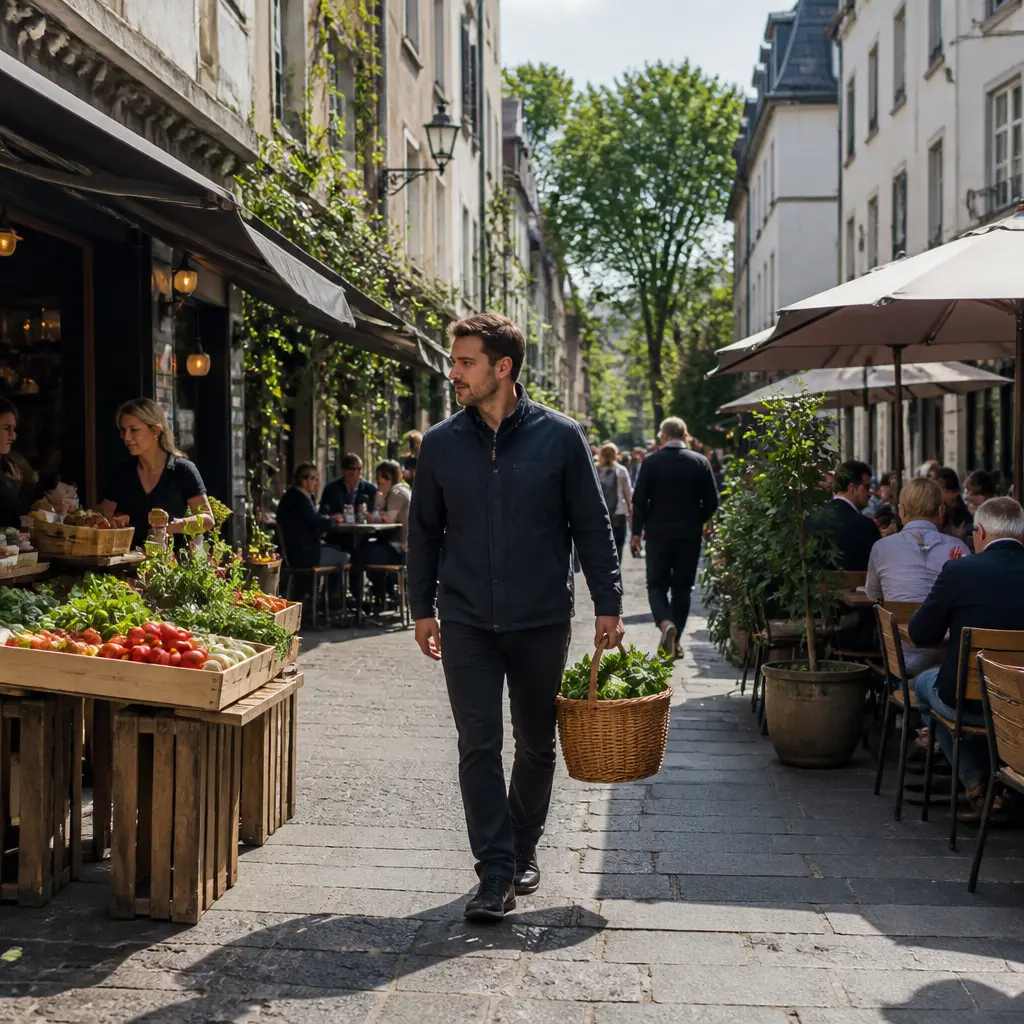
Local chefs and travel bloggers often identify restaurant-adjacent neighborhoods—districts where dining is closely linked to markets, independent shops, bars, lodging, transit, and cultural landmarks—as the best places to understand a city through food. Their recurring favorites include Jackson Heights in New York, the Alberta Arts District and Division Street in Portland, the Marigny and Bywater in New Orleans, Arroios in Lisbon, and the 11th arrondissement in Paris. The trend matters because eating away from home represented 58.5% of U.S. food spending in 2023, according to the USDA Economic Research Service, while the National Restaurant Association reported that restaurants generated more than $1 trillion in U.S. sales in 2024.
Neighborhood Recommendations Define Local Chef and Travel Blogger Expertise
The entity-attribute pairing in this article is local chef or travel blogger—restaurant-adjacent neighborhood knowledge. It describes the connection between a trusted food-oriented guide and a neighborhood whose restaurants are inseparable from its markets, immigrant communities, nightlife, architecture, or everyday shopping. A local chef contributes operational knowledge—ingredient quality, seasonality, sourcing, and consistency—while a travel blogger contributes comparative observation about accessibility, atmosphere, price, and the visitor experience.
This pairing is more useful than a list of isolated restaurants because restaurants operate within local ecosystems. The U.S. Bureau of Labor Statistics’ Consumer Expenditure Survey consistently shows that food-away-from-home purchases are a major household expense, making neighborhood selection part of travel budgeting as well as cultural exploration. A restaurant-adjacent district also helps visitors distribute spending among restaurants, bakeries, food halls, markets, independent retailers, and cultural venues rather than concentrating it in one destination restaurant.
Chef-Led Neighborhood Picks Emphasize Supply Chains and Repeatability
A chef-led neighborhood recommendation is a professional assessment of where ingredients, preparation traditions, and restaurant labor create a distinctive local food culture. Chefs tend to notice details that casual visitors miss: whether a seafood district is still connected to working docks, whether a market serves residents rather than only tourists, and whether several restaurants share reliable regional suppliers.
The strongest chef recommendations usually have three characteristics: a concentration of independent operators, visible links between restaurants and producers, and enough variety to support several meals. Jackson Heights illustrates the model through South Asian, Himalayan, Tibetan, Latin American, and Colombian food businesses. In New Orleans, the Marigny and Bywater connect restaurants and bars with music, Creole traditions, neighborhood architecture, and walking routes. In Portland, Alberta Arts and Division Street demonstrate how restaurants can coexist with bakeries, coffee shops, food carts, galleries, and small retailers.
Travel-Blogger Neighborhood Picks Emphasize Discovery and Practical Access
A travel-blogger neighborhood recommendation is a visitor-centered account that evaluates what can be experienced within a manageable route. Bloggers typically compare opening hours, reservation pressure, transit connections, walking conditions, price levels, dietary options, and the relationship between popular venues and less-publicized local businesses.
Travel writers frequently favor districts that offer a narrative arc: breakfast at a bakery, a market or museum visit, a casual lunch, an afternoon coffee, and an evening meal. Arroios in Lisbon fits this pattern through its mix of traditional tascas, international restaurants, bakeries, and residential streets. Paris’s 11th arrondissement offers a similar combination of neighborhood cafés, wine bars, modern bistros, markets, and nightlife. These areas are not merely restaurant clusters; they are practical bases for understanding how residents eat, shop, socialize, and move through the city.
Restaurant-Adjacent Neighborhoods Connect Food, Culture, and Local Economies
The predicate “restaurant-adjacent” describes the relationship between dining businesses and the surrounding urban or cultural setting. It includes several related types: market-adjacent districts, immigrant food corridors, nightlife neighborhoods, cultural quarters, and mixed-use residential areas. Each type produces a different kind of culinary experience and should be judged by different criteria.
Market-Adjacent Districts Make Food Sourcing Visible
Market-adjacent neighborhoods are areas where restaurants benefit from proximity to public markets, specialty grocers, fish markets, butcher shops, or produce distributors. Borough Market in London, Mercado de San Miguel in Madrid, and the stalls around Barcelona’s La Boqueria demonstrate how food retail can become a visitor attraction, although the most sustainable visits also include businesses serving local residents.
Chefs value these districts because they reveal seasonality and product diversity. Bloggers value them because one walk can combine shopping, tasting, photography, and historical context. The limitation is that market popularity can raise rents and intensify crowding. A useful guide therefore distinguishes between a market’s visitor-facing stalls and the broader neighborhood’s everyday food economy.
Immigrant Food Corridors Preserve Culinary Knowledge
An immigrant food corridor is a neighborhood where restaurants, grocers, bakeries, religious institutions, and community organizations maintain and adapt culinary traditions brought from other regions. Jackson Heights, Los Angeles’s Koreatown, Chicago’s Devon Avenue, and Toronto’s Kensington Market show how food businesses can function as cultural infrastructure.
Local chefs often recommend these corridors for depth rather than novelty: a visitor can compare regional styles, ingredient substitutions, spice profiles, and cooking techniques within a short distance. Travel bloggers add practical guidance about language, payment methods, portion sizes, queue etiquette, and whether a business is designed primarily for takeout, family dining, or celebration meals. The most responsible coverage identifies the communities behind the food instead of treating cultural traditions as scenery.
Nightlife and Mixed-Use Districts Extend the Dining Experience
Nightlife-adjacent neighborhoods connect restaurants with cocktail bars, music venues, theaters, late-night cafés, and pedestrian activity. New Orleans’s Marigny, Austin’s East Austin, and parts of Mexico City’s Roma Norte and Condesa illustrate how evening dining can be combined with entertainment and street-level exploration.
Mixed-use districts are especially attractive to travelers because they reduce the need for long journeys between activities. They can also support restaurants beyond the traditional dinner period. However, food writers should address noise, crowding, safety, accessibility, and the effects of short-term rentals. The National Restaurant Association’s industry data shows the economic scale of dining, but neighborhood-level benefits depend on whether spending reaches locally owned businesses and year-round workers.
Chefs and Travel Bloggers Evaluate Neighborhoods with Complementary Criteria
The chef and blogger perspectives overlap, but they are not interchangeable. A chef may prioritize ingredient integrity, technique, and relationships with suppliers. A travel blogger may prioritize clarity, convenience, atmosphere, and the ability to build a coherent itinerary. Combining both perspectives produces a more reliable neighborhood recommendation.
Food Quality and Culinary Identity
Food quality refers to freshness, preparation, consistency, and the integrity of a dish’s culinary identity. Culinary identity is the recognizable connection between food and place, expressed through ingredients, cooking methods, migration histories, or local rituals. A neighborhood earns strong recommendations when multiple businesses express related traditions without becoming identical.
For example, a visitor exploring Jackson Heights can move from a momo shop to a Colombian bakery or a South Asian sweets counter and encounter distinct traditions within the same urban environment. In Lisbon’s Arroios, the defining experience is less a single signature dish than the coexistence of Portuguese and international dining shaped by a diverse residential population.
Walkability, Transit, and Time Efficiency
Walkability is the practical ability to reach several food and cultural destinations safely and comfortably on foot. Transit access extends that range through subway, tram, bus, cycling, and rideshare connections. Bloggers often rate these characteristics more explicitly than chefs because visitors must plan around unfamiliar geography and limited time.
A useful neighborhood guide should state whether the area works best for a two-hour food crawl, a full day, or a late-night itinerary. It should also flag reservation requirements, peak dining periods, restroom access, steep streets, weather exposure, and the distance between a transit stop and the recommended restaurants. These practical details turn local knowledge into usable travel advice.
Affordability and Community Benefit
Affordability is the relationship between local prices and a traveler’s available food budget; community benefit is the extent to which visitor spending supports residents, workers, and independent businesses. The two concepts are related but not identical. An expensive neighborhood can still support local producers, while a low-cost destination can be dominated by external ownership or precarious labor.
The USDA Economic Research Service’s finding that food-away-from-home spending accounted for more than half of U.S. food spending in 2023 underscores the importance of directing dining budgets thoughtfully. Visitors can increase local benefit by eating at a mix of established institutions and newer independent businesses, shopping at neighborhood grocers, tipping appropriately, avoiding peak congestion when possible, and respecting resident-oriented spaces.
A Practical Framework for Choosing a Favorite Restaurant-Adjacent Neighborhood
Readers can compare chef and blogger recommendations with a simple framework. First, identify the neighborhood’s culinary anchor: a market, immigrant corridor, restaurant street, food hall, or cultural institution. Next, test whether the area offers variety across price points and meal periods. Finally, examine access, local ownership, resident impact, and the credibility of the recommendation.
A text-based comparison chart would score each destination from one to five for culinary depth, walkability, affordability, cultural context, and itinerary flexibility. Jackson Heights would score especially high for culinary diversity and cultural context; the Marigny and Bywater for nightlife and atmosphere; Arroios for mixed-use exploration; and Portland’s Alberta and Division areas for the combination of independent restaurants, cafés, and retail. Scores should be treated as planning tools rather than universal rankings because the best neighborhood depends on budget, mobility, dietary needs, and travel purpose.
The most trustworthy recommendation also includes caveats. Restaurant hours change, popular districts evolve, and a neighborhood’s reputation may outpace its benefit to residents. Readers should verify current hours, consult recent local reporting, and favor guides that name businesses, explain context, disclose sponsorships, and acknowledge Indigenous, immigrant, and working-class histories.
Conclusion: Local Expertise Makes Neighborhood Dining More Meaningful
Local chefs and travel bloggers make restaurant-adjacent neighborhoods legible by connecting restaurants with markets, migration, architecture, transit, nightlife, and daily life. The chef-led pairing emphasizes sourcing, technique, and culinary continuity; the travel-blogger pairing emphasizes discovery, access, timing, and itinerary value. Together, they explain why destinations such as Jackson Heights, the Marigny and Bywater, Arroios, Paris’s 11th arrondissement, and Portland’s Alberta and Division districts can offer more insight than a single famous restaurant.
Because food-away-from-home spending and restaurant employment represent substantial parts of the economy, neighborhood dining also has broader implications for local businesses, cultural preservation, affordability, and urban change. Travelers should use chef and blogger recommendations as starting points, verify current information, spend beyond headline venues, and read local reporting before visiting. That approach turns a restaurant list into a more respectful and economically informed exploration of place.
Sources: National Restaurant Association, 2024 State of the Restaurant Industry Report, https://restaurant.org/research-and-media/research/research-reports/state-of-the-restaurant-industry/; U.S. Department of Agriculture Economic Research Service, Food Expenditure Series, https://www.ers.usda.gov/data-products/food-expenditure-series/; U.S. Bureau of Labor Statistics, Consumer Expenditure Surveys, https://www.bls.gov/cex/; Eater, Neighborhood and City Guides, https://www.eater.com/maps; AFAR, Travel Guides, https://www.afar.com/; Lonely Planet, Travel Guides, https://www.lonelyplanet.com/; National Geographic Travel, Food and Travel Coverage, https://www.nationalgeographic.com/travel/.


